

Too many clicks.
Five tabs, two scrolls, three filters, just to remember whether Luna's last ALP was elevated. The data is there. The path to it is the problem.
Sage prepares. You approve.
Meet Sage, built into Bittsi, built for veterinary medicine.
Ask Sage anything about a patient. Get chart summaries, lab trend highlights, medication safety checks, and toxicology guidance in seconds, without leaving your PIMS — and let it prepare the day's briefs, estimates and reminders before you ask, with nothing sent, billed or signed without you.
Here's a 90-day summary for Luna Martinez, focused on what's worth a closer look:
The information you need is already in the chart, labs, history, prescriptions, prior notes. The problem is finding it during a 12-minute visit. Sage reads the whole record so you don't have to.
Five tabs, two scrolls, three filters, just to remember whether Luna's last ALP was elevated. The data is there. The path to it is the problem.
You see today's vitals, not last quarter's trend. By the time you piece the story together, the appointment is already running long.
NSAID on top of furosemide. A dose that's right for a Lab but wrong for a Yorkie. Most PIMS won't flag it. A clinical assistant should.
Your software stores notes, it doesn't read them. When you need a 90-day summary or a toxicology check, you're on your own.
Bittsi Sage is the AI layer inside Bittsi PIMS that does a veterinary clinic's paperwork before the clinic asks. Everything below happens on its own — and nothing it writes is ever sent, billed, prescribed or signed without a person approving it first.
Overnight, Sage reads the chart behind every appointment on tomorrow's schedule and writes a brief: why they're here, the history that matters, and a draft plan. Ready before the first person unlocks the door.
The estimate. The reminder. The follow-up message to the owner. The refill request. Written as the reason for them appears, not at the end of a shift when they're remembered.
Your post-op recheck interval. Your reminder cadence. How you like weights shown. Told once, applied from then on — shared with your team or kept to you.
Sage compares the invoice against what was actually documented and surfaces the charges that were earned and never billed. You choose which ones are right.
Every draft Sage writes carries the same line: it is waiting for a person. The reminder is not scheduled until a teammate approves it in Reminders. The message is not sent until someone approves it in Conversations. The refill is not dispensed until the assigned teammate approves it. The estimate stays a draft until a human opens it.
Sage has no authority to send, bill, prescribe or sign. That is not a setting you can turn off — it is how it is built.
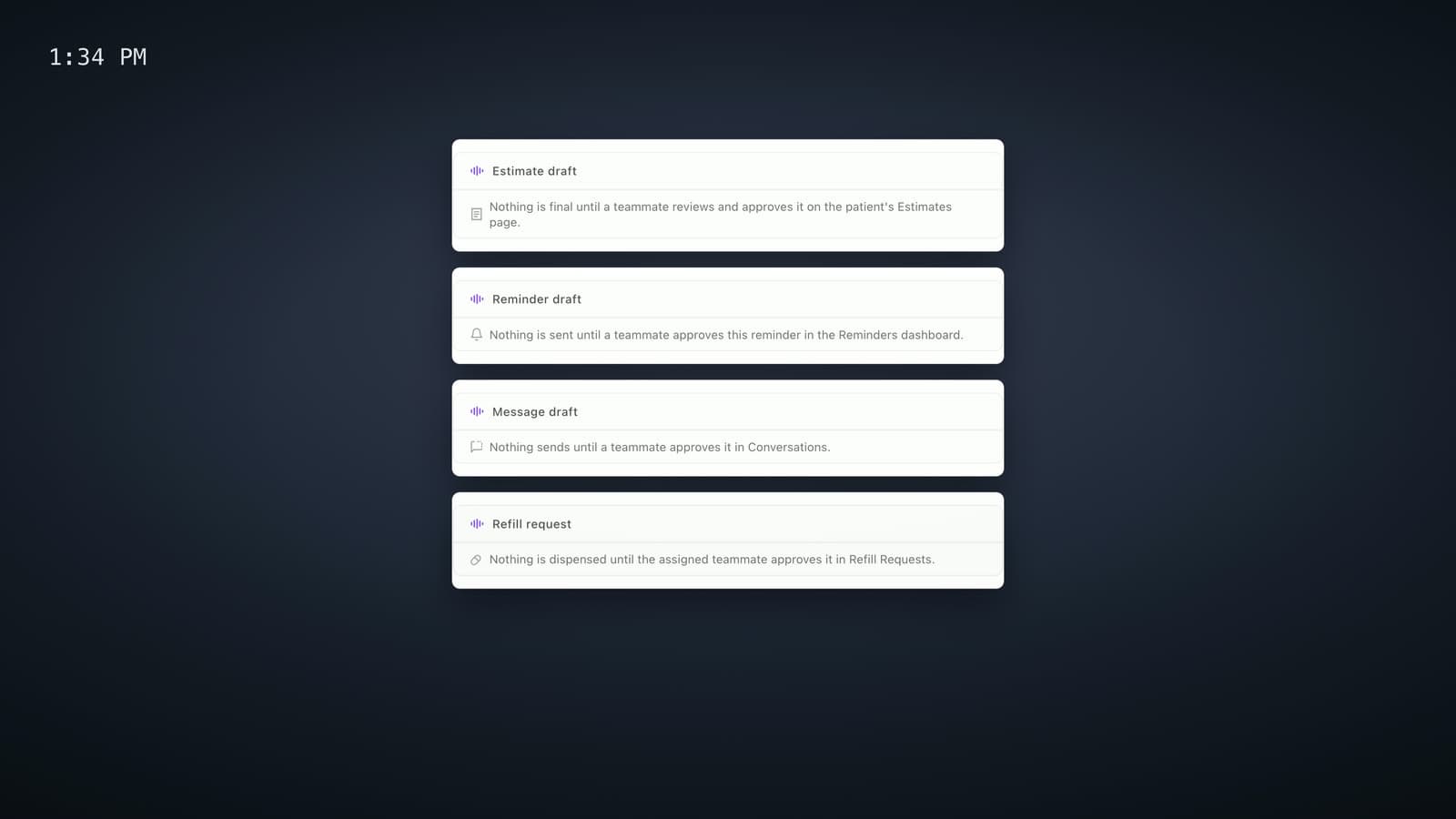
Patients, staff and clinic shown are fictional. Interface reproduced from Bittsi PIMS.
Bittsi Sage is not a chatbot bolted onto a search bar. It reads your clinic's records, cites published veterinary guidelines (AAHA, AAFP, WSAVA, IRIS, ACVIM), and lives inside the screens your team already uses.
Open any record and ask "what's going on with this patient?" Sage reads every SOAP, lab and prescription in the file and gives you a focused brief: the diagnoses that matter, the trends that are moving, and the issues that need a follow-up.
A surgery gets documented and the anaesthesia line never makes it onto the invoice. It happens in every hospital, on the busiest days, and nobody finds it later.
At close-out Sage reads what was actually recorded against what was actually charged and shows you the difference — item by item, with what it found each one in. Approve the ones that are right. The rest disappear.
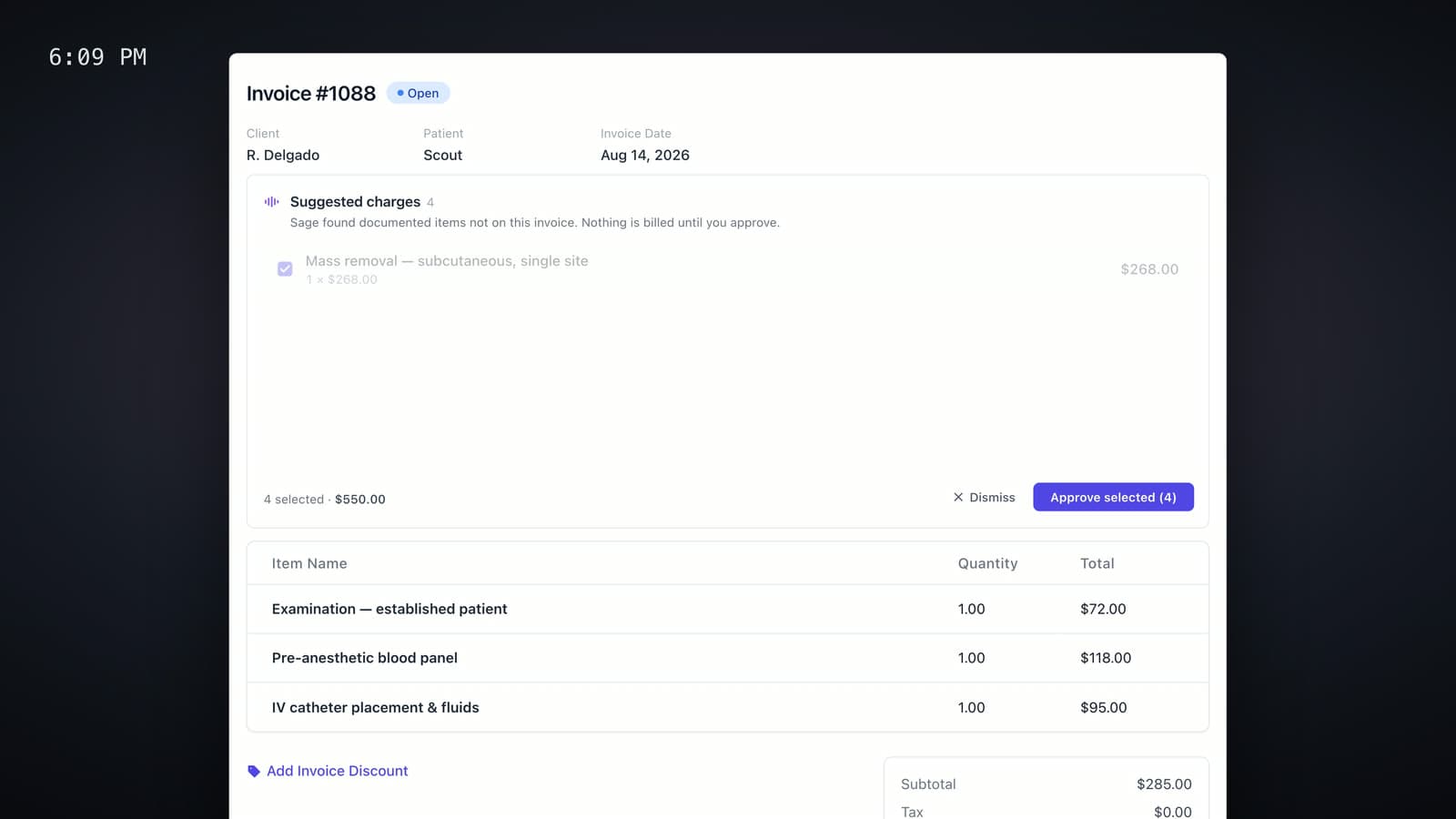
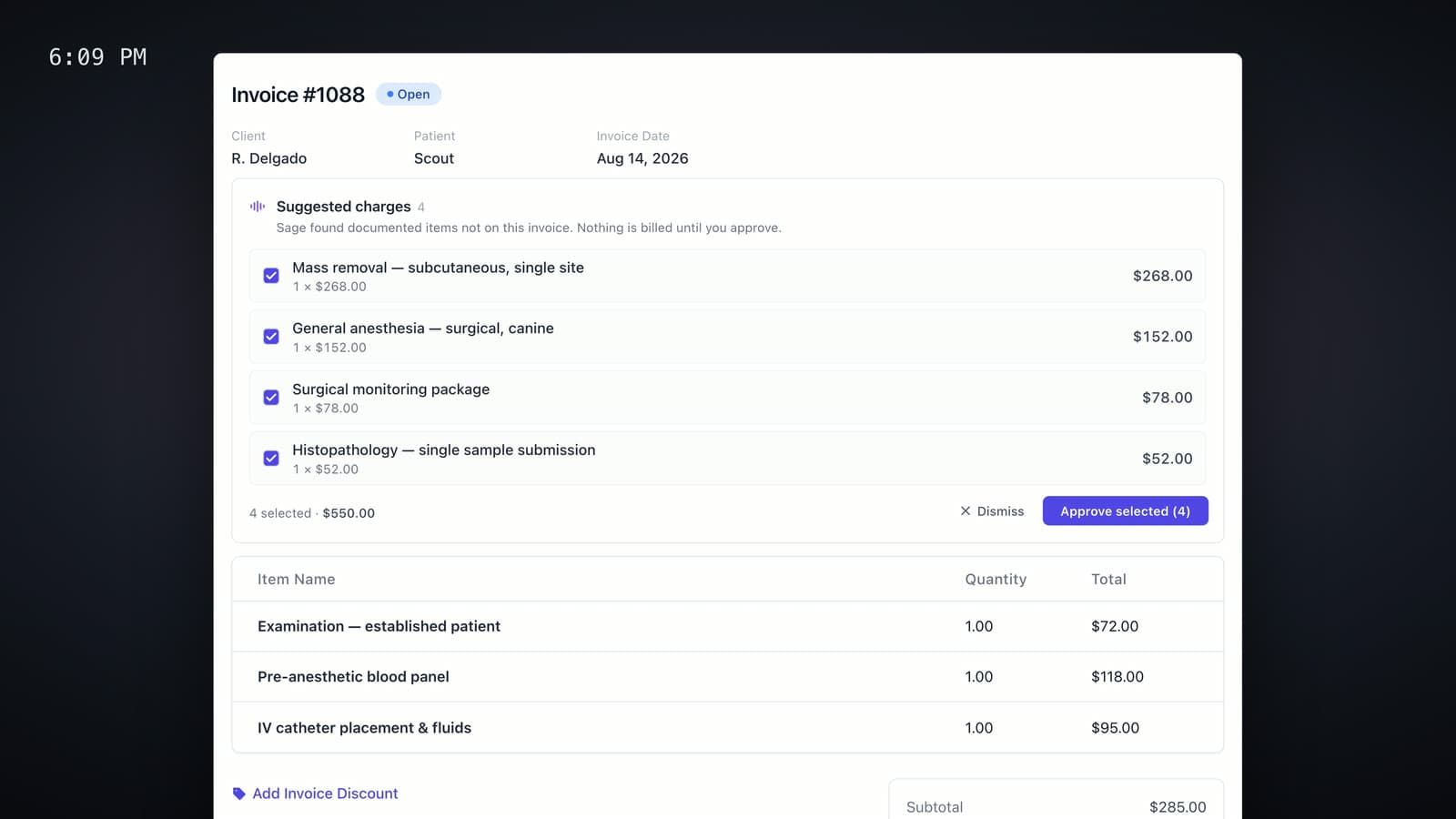
The example shown is a fictional patient and a fictional invoice. It is not a typical or expected recovery figure. Real numbers come from the Impact dashboard, on real clinics, with permission. Read how we measure it.
Sage counts only what your staff actually approved. Refunds are subtracted. Dismissed and pending drafts are never counted as earned. You see the proposal rate, the approval rate and what was dismissed — including the things you decided against.
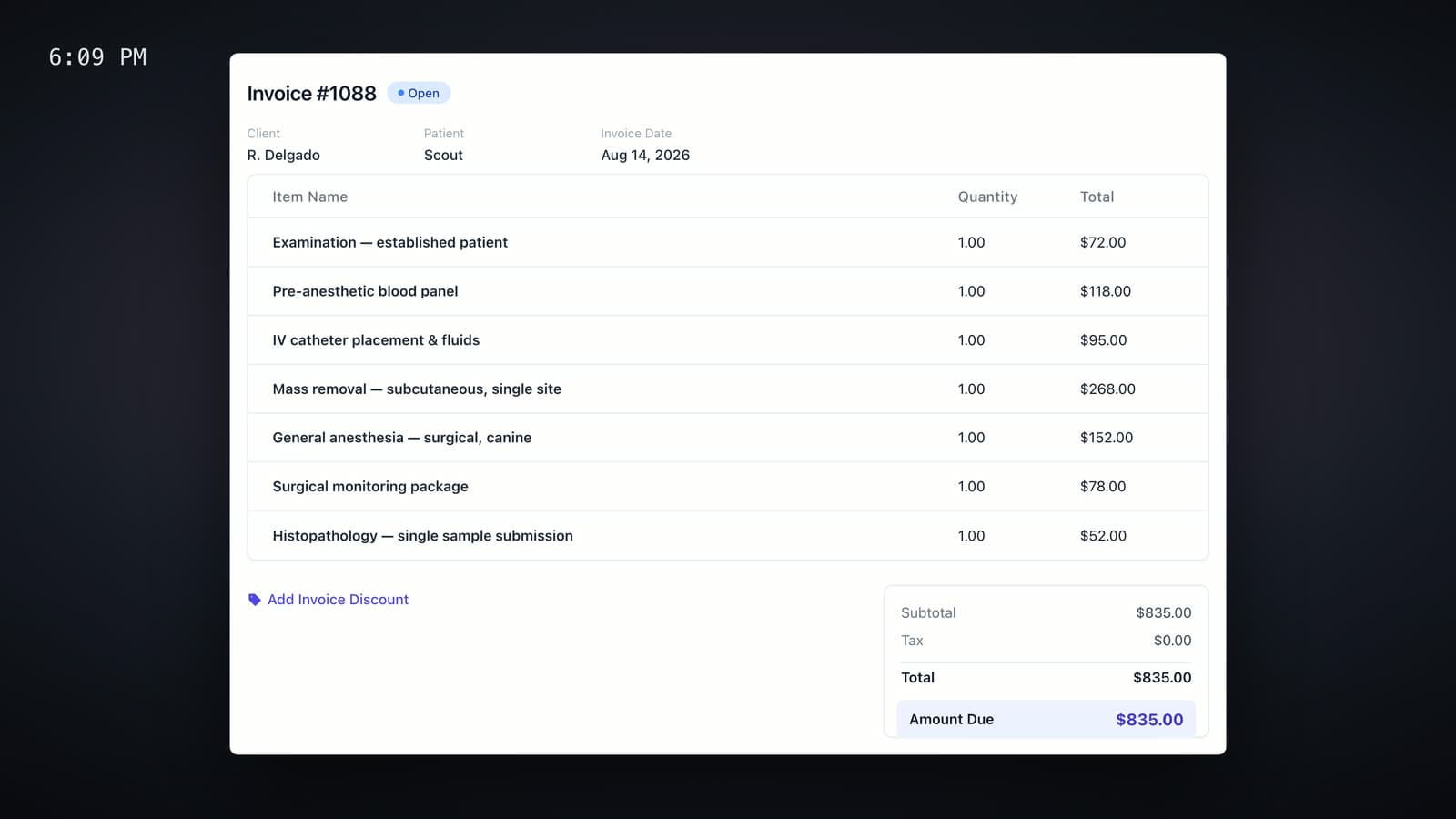
Patients, staff and clinic shown are fictional. Interface reproduced from Bittsi PIMS.
From 7am rounds to the 6pm last visit, Sage shows up at the moments your team needs a second set of eyes.
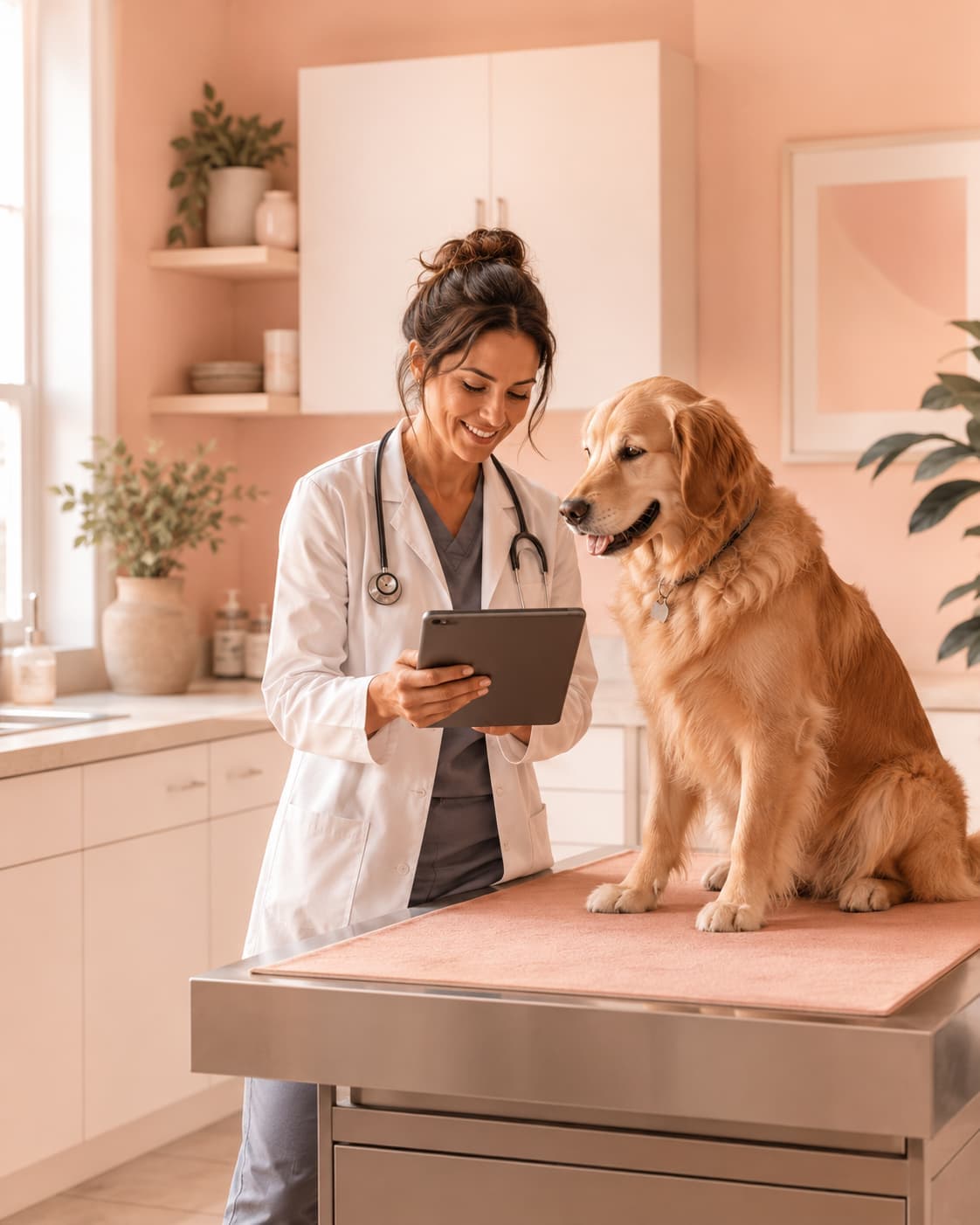 Exam room · 10:14 AM
Dr. Patel asks Sage from inside the chart, a 90-day brief lands before she lifts her stethoscope.
 Lab bench
Sage flags an ALP trend across three panels, before it becomes a diagnosis.
 Front desk
Tox dose, decon protocol, monitoring window, answered before the patient walks in.
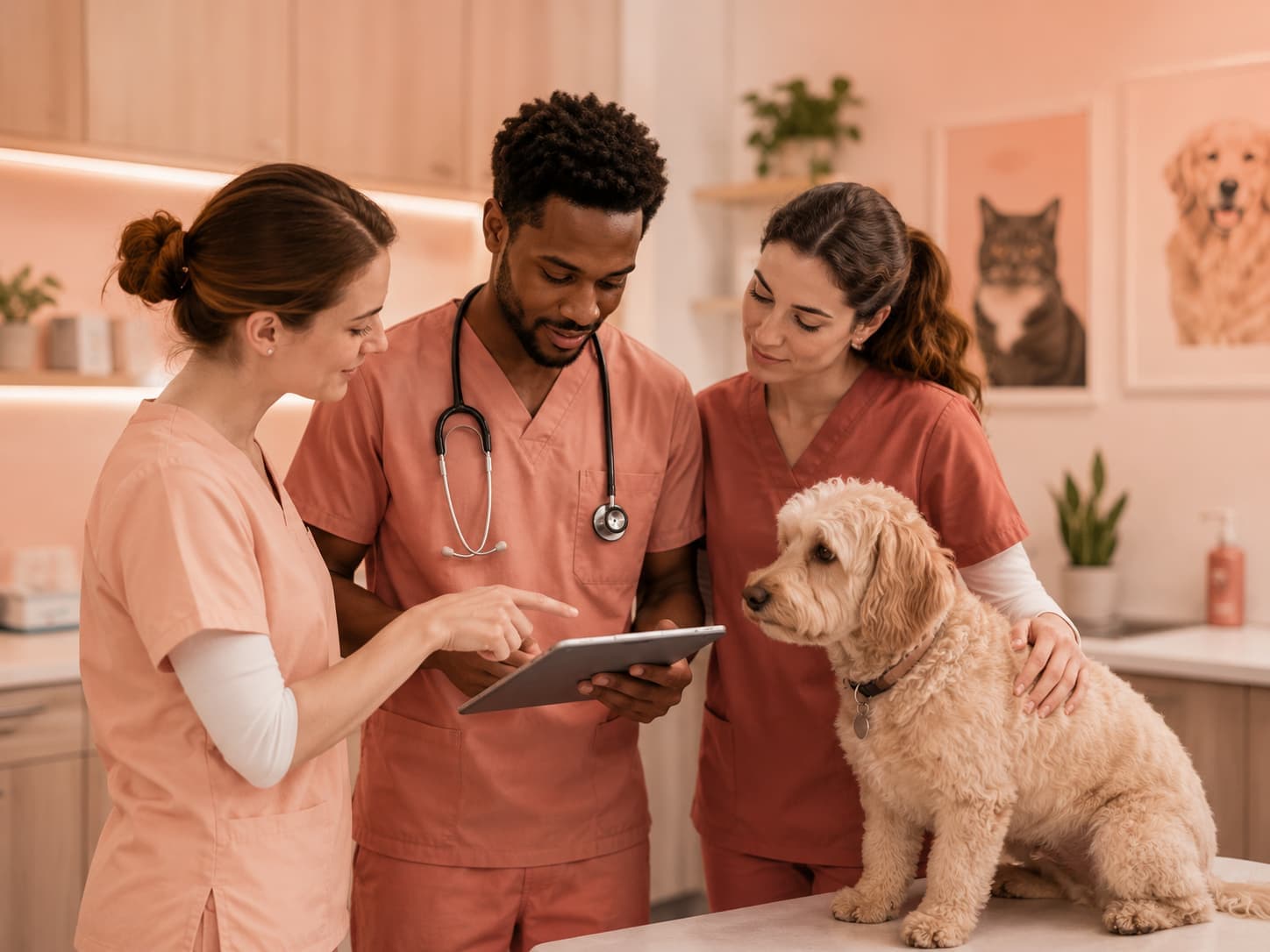 Team huddle · 7:45 AM
Sage prepares a brief on every patient on the schedule, the team starts the day already aligned.
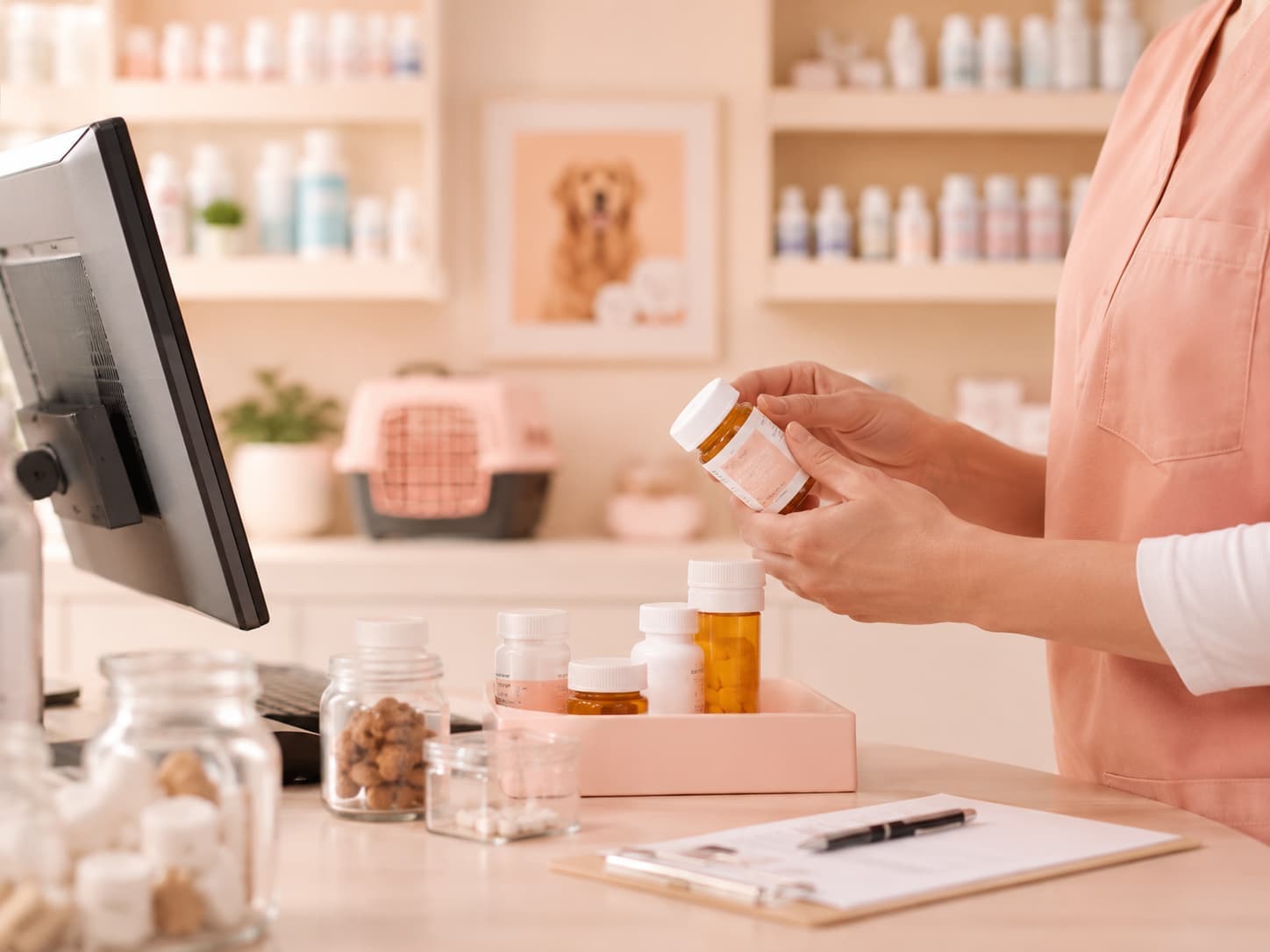 Pharmacy
Interactions, weight-aware doses, lab-aware contraindications, checked before the script prints.
No new app to log into, no chart to copy and paste. Sage lives inside Bittsi PIMS and reasons over the records you already keep.
SOAP notes, lab panels, prescriptions, vaccinations, prior visits, Sage pulls context from every part of the record before answering.
Type or speak, the way you'd ask a colleague. “Summarize Luna's case.” “Is this dose safe?” “What did we try last time?” No prompt engineering.
Guideline answers cite the exact page; record answers link to the patient, SOAP, invoice or estimate. If Sage can't source something, it tells you.
Sage suggests, flags, and summarizes, but never signs, prescribes, or sends without your confirmation. Clinical decisions stay with the clinician.
Same patient. Same chart. Same exam window. One workflow buries the answer; the other surfaces it.
Every Bittsi Sage insight is grounded in the patient's actual record and citable to its source. Sage never auto-prescribes, auto-signs, or acts without a person's approval. Clinical authority stays with you.
In transit and at rest, with each clinic's data isolated at the database level.
Every answer and every action is tied to a named user in the record.
Guideline answers cite the exact page. If Sage can't source it, it says so.
Sage proposes; clinicians sign. No autonomous clinical actions.
Don't see yours? We're a quick email or call away, and a 30-minute demo answers most things faster than reading.
Nothing that sends, bills, prescribes or signs. Sage reads and drafts on its own — briefs, estimates, reminders, messages, refill requests, suggested charges — and every one of them waits for a person to approve it. That is not a permission setting; it is how the product is built.
Overnight it reads the chart behind every appointment on the next day's schedule and writes a pre-visit brief. Through the day it drafts the estimates, reminders, client messages and refill requests the day creates, as the reasons for them appear. At close-out it checks the invoice against what was documented and surfaces charges that were never billed.
Sage shows you monthly what it proposed, what your staff approved and what was dismissed. It counts only approved work, subtracts refunds, and never counts pending or dismissed drafts as earned. The dismissal rate is in there too.
Yes. Your post-op recheck interval, your reminder cadence, how you like weights shown — tell Sage once and it applies from then on. Practice notes can be shared with your whole team or kept private to you.
Sage is a clinical assistant grounded in the patient's actual record. Where a generic chatbot would guess, Sage reads the SOAPs, labs, and prescriptions in your PIMS and answers from those sources. Guideline answers cite the exact page, and if Sage can't source something, it tells you.
No. Sage suggests, flags, and summarizes, and stops there. Prescriptions, signatures, and anything sent to an owner require your explicit confirmation. Clinical authority stays with the clinician, by design.
Two layers. Published veterinary guidelines (AAHA, AAFP, WSAVA, IRIS, ACVIM) and curated drug-safety and toxicology references, plus your clinic's own record for this patient. Answers that lean on a guideline cite the exact page, so you can check the source rather than take our word for it.
Records stay in your tenant, encrypted in transit and at rest and isolated from every other clinic at the database level. Sage reads only what the signed-in user is allowed to see, never acts without a person's approval, and keeps every conversation in an audit log.
Nothing. Sage is part of Bittsi PIMS, so it appears in the screens your team already uses, with the permissions they already have. There are no new logins to manage.
They do different jobs and work well together. AI Scribe writes the note from the visit; Sage reads everything already in the chart and reasons over it. Scribe gets the record down, Sage puts it to work.
Two longer pieces on the parts of Bittsi Sage that deserve more than a section: how close-out reconciliation actually works, and what a clinic's first month with it looked like.
How close-out reconciliation compares documented care against the invoice, why missed charges happen on the busiest days, and exactly how we measure what a clinic recovered — including what we refuse to count.
A practice owner and a lead tech on what changed when the briefs were already written at 7am — what they approved, what they dismissed, and the habits they had to unlearn.
See Sage live in a 30-minute demo. We'll plug into a real chart, run a chart summary, a lab review, and a toxicology triage, and show you how it lands inside Bittsi PIMS.
No credit card · 30-min walkthrough