
AI for Emergency Vet Clinics: Faster Workflows, Better Docs
Discover how AI for emergency veterinary clinics speeds up documentation, cuts workload, and helps high-volume hospitals manage cases efficiently.
AI for Emergency Veterinary Clinics: Faster Workflow & Better Documentation
The pace inside an emergency veterinary hospital is different from anything you see in general practice. Cases arrive without warning. Priorities shift in seconds. A stable patient can suddenly become critical, while another is still waiting for triage notes to be completed. Speak with any veterinarian coming off an overnight emergency shift, and the same frustration tends to surface: documentation. It’s not a lack of knowledge or clinical clarity — it’s the simple reality that there’s hardly ever enough time to capture everything properly in the moment. This is where AI for emergency veterinary clinic environments is starting to make a real difference.
Why Documentation Breaks Down in Emergency Veterinary Clinics
In high-pressure environments, documentation isn’t the priority, patient care is. And rightly so. But the structure of most systems still assumes a calmer workflow:
-
time between appointments
-
the ability to sit and complete notes
-
predictable case progression
None of these exist in emergency settings. Instead, information is scattered:
-
quick verbal updates
-
partial notes written between cases
-
details remembered and recorded later
I’ve seen clinics where the treatment quality is excellent, but the records don’t reflect it. Important details are either delayed or missing entirely — not due to lack of skill, but because the workflow doesn’t support real-time documentation.
The Hidden Cost of Manual Workflows in High-Volume Vet Hospitals
 The impact of this isn’t always obvious at the moment. It builds over time. When documentation falls behind, it affects more than just compliance:
-
shift handovers become less reliable
-
treatment continuity becomes harder to maintain
-
billing can become inconsistent
-
veterinarians stay longer after shifts to finish records
Many practice managers say the real stress begins after the last patient is treated — when the team still has hours of notes left to complete. This is one of the biggest operational challenges in automation for high-volume vet hospitals: not the medicine itself, but everything surrounding it.
AI SOAP Emergency Vet Tools: A Shift Toward Real-Time Documentation
What’s changing is not how veterinarians work, but how their work is captured. With AI SOAP emergency vet systems, documentation is no longer something that happens after the case. It happens alongside it. Instead of stopping to write, clinicians can:
-
speak naturally during consultation
-
document observations as they happen
-
allow AI to structure everything into SOAP format
The key shift is this: documentation becomes continuous, not delayed.
How AI for Emergency Veterinary Clinics Works in Practice
In real clinical environments, AI doesn’t interrupt workflow — it supports it quietly in the background. A typical scenario might look like this: A critical patient arrives. The veterinarian begins assessment, speaking observations out loud — symptoms, suspected conditions, immediate actions. An AI system captures that interaction and starts building structured notes instantly. As treatment continues:
-
medications are recorded
-
procedures are logged
-
updates are organized into the patient record
By the time the case stabilizes, much of the documentation is already complete. This is where AI for emergency veterinary clinic workflows shows its real value — not by adding steps, but by removing them.
Benefits of Automation for High-Volume Emergency Veterinary Hospitals
When documentation keeps up with the pace of care, several improvements happen naturally. First, shift transitions become clearer. Incoming staff don’t need to reconstruct cases — they can immediately understand them. Second, mental load is reduced. Veterinarians no longer rely on memory to fill documentation gaps hours later. Third, record quality improves. Notes reflect what actually happened, not what was remembered afterward. Over time, this leads to:
-
better clinical clarity
-
fewer missed details
-
more consistent patient records
And importantly, teams regain time that would otherwise be spent catching up.
Where Bittsi Fits in Emergency Veterinary AI Workflows
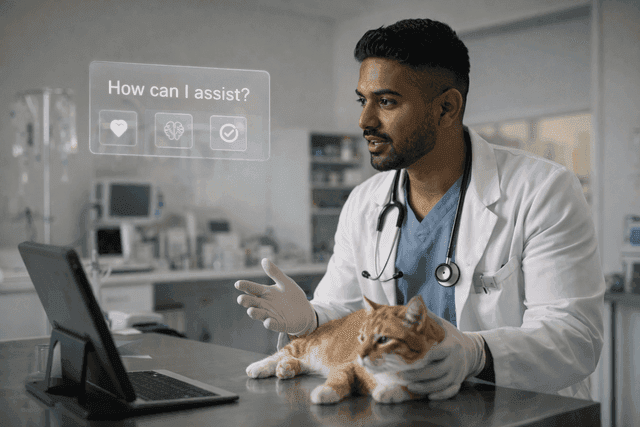 Some platforms are starting to build these capabilities directly into their core systems rather than treating them as separate tools. Bittsi Veterinary PIMS, for example, integrates AI-driven documentation, workflow management, and real-time data capture into a single environment. This means clinicians don’t need to adjust how they work or switch between systems during critical moments. In emergency settings, that matters. The system supports the pace of the clinic instead of slowing it down. If you're exploring how this works in practice, you can look at AI Solutions for Emergency Clinics to see how these workflows are being implemented in real environments.
AI in Emergency Veterinary Clinics Within the Larger Practice Management Shift
Emergency hospitals often highlight the most visible problems — speed, pressure, and unpredictability. But the same underlying challenges exist across all types of clinics. As AI becomes more integrated into veterinary systems, the improvements seen in emergency settings begin to extend into:
-
general practice workflows
-
multi-location coordination
-
long-term patient record consistency
This broader transition is part of what’s shaping AI in Veterinary Practice Management: The Future of Clinic Efficiency, where documentation, communication, and operations are increasingly connected.
Conclusion
Emergency veterinary medicine will always be fast, unpredictable, and demanding. What’s changing is how clinics keep up with that pace behind the scenes. As AI SOAP emergency vet tools and workflow automation continue to improve, documentation is becoming less of a burden and more of an integrated part of care. Platforms like Bittsi Veterinary PIMS are already moving in this direction, bringing real-time documentation and workflow support directly into the clinical environment. Over time, this shift is likely to become standard — not because clinics are chasing technology, but because they need a way to maintain accuracy without slowing down.
Comments
0 CommentFAQ
More from Veterinary AI & Technology.
Veterinary Online Booking: Appointment Requests, Confirmations, and PIMS Integration
Evaluate veterinary online booking, appointment requests, confirmations, and PIMS integration with a practical workflow checklist for your clinic.
Veterinary Marketing Software: Connecting Your Website, Online Booking, and PIMS
Learn how to connect your veterinary website, appointment requests, and PIMS to track new clients, attended visits, and marketing outcomes.
Reducing Operational Costs in Veterinary Clinics Without Cutting Care
Practical ways to reduce veterinary clinic operating costs — inventory waste, admin time, reconciliation, and no-shows — without compromising patient care.
One short read · every Friday · from working clinics.
Workflow notes, what's actually changing in practice, and one good link from the week. No marketing, no upsells. Unsubscribe whenever.