
AI in Veterinary Practice Management: The Complete 2026 Guide
AI in veterinary practice management means documentation, clinical decisions, and daily operations handled in one place. See how Bittsi's AI-native PIMS works.
AI in Veterinary Practice Management: The Future of Clinic Efficiency
AI in veterinary practice management refers to the use of artificial intelligence within veterinary clinic software to automate documentation, coordinate clinical workflows, and reduce administrative tasks. Unlike traditional PIMS platforms that only store records, AI-powered systems actively participate in the workflow — generating SOAP notes, flagging clinical patterns, and managing operational tasks in real time.
Ask almost any veterinarian what slows down a busy clinic day, and documentation is usually one of the first answers. A consultation itself may take fifteen minutes, sometimes less, but the administrative work often continues long after the patient leaves the exam room. Clinical notes must be written, treatments recorded, inventory updated, charges entered, and follow-ups scheduled. None of these tasks are medically complex, yet together they consume a significant portion of a clinic's working hours.
In many veterinary clinics, particularly private practices, the clinical workflow itself runs efficiently. Veterinarians understand the diagnosis, technicians know their responsibilities, and treatment plans are clear. The difficulty often appears in the operational layer that surrounds the appointment. Documentation, coordination, and administrative tasks fragment the workflow and slow down the day. This operational pressure is one of the main reasons why AI in veterinary practice management is becoming an increasingly important topic across the industry. Rather than being driven by hype, interest in AI is largely a response to a practical problem that most veterinary teams experience daily.
What Is AI in Veterinary Practice Management?
Rather than replacing veterinarians, AI-driven tools are designed to support clinical teams by reducing routine administrative friction. By helping clinics manage information more effectively, these systems allow veterinary professionals to focus more attention on patient care while maintaining accurate and structured medical records.
The Real Cost of Veterinary Admin Work
Veterinary medicine is often described as a fast-paced profession, and clinically that is accurate. Operationally, however, veterinary work is highly layered. Research consistently shows that veterinarians spend one to two hours per day on documentation alone — time that typically accumulates after scheduled appointments have already ended. A single appointment can trigger multiple downstream tasks: SOAP notes must be written, treatment sheets updated, medications logged, invoices adjusted, and follow-ups scheduled.
When clinic volume is low, these steps remain manageable. During busy hours, the process becomes more fragile. Small delays begin to accumulate. Documentation gets postponed. Inventory changes go unrecorded. The most common bottlenecks veterinary practice managers observe include:
• Incomplete SOAP notes building up as a backlog by end of day
• Missed inventory updates leading to stock discrepancies
• Minor billing errors from delayed or reconstructed documentation
• Veterinarians finishing records after clinic hours instead of going home
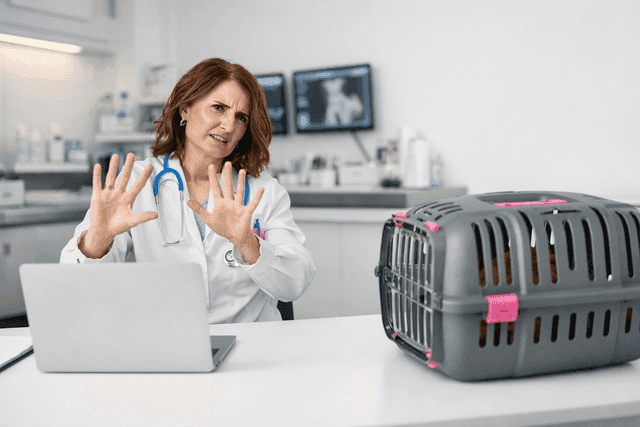
Many practice managers note that the operational pressure often begins after the appointment ends, when documentation and record updates must be completed while the next patient is already waiting. This situation is not caused by a lack of software — most clinics already use veterinary practice management systems. The challenge is that many of these platforms still depend heavily on manual interaction. The system stores information, but clinic staff must enter and organize most of the data themselves. Over time, this administrative workload becomes embedded in the daily rhythm of the clinic and is accepted as normal operational overhead.
Why Traditional Veterinary Practice Software Is No Longer Enough
Veterinary practice management software — also known as a veterinary PIMS (Practice Information Management System) — has been part of clinic operations for decades. Most of these systems were originally designed as digital record systems. They store patient records, handle billing, and manage appointment calendars. For many years, this functionality was sufficient. However, modern veterinary clinics operate in a far more complex environment than when these systems were first introduced.
A typical day in a busy veterinary clinic now involves multiple simultaneous operational layers:
• Multiple simultaneous appointments across exam rooms
• Digital imaging records integrated with patient files
• Treatment sheets and real-time medication tracking
• Two-way client communication and automated reminders
• Inventory management and purchase order tracking
• Financial reporting and invoice reconciliation
• Staff coordination across treatment rooms and shifts
Many traditional platforms technically support these tasks. The challenge lies in how the workflows are structured. Processes remain fragmented: clinical documentation exists in one module while billing is managed in another. Treatment records require manual entry. Client communication relies on separate tools. During peak hours — which for most practices represent the majority of the day — this structure becomes inefficient. Veterinarians move between multiple screens, re-enter information, and postpone documentation until later.
When documentation is delayed, operational issues follow: incomplete SOAP notes, missed inventory updates, and minor billing discrepancies. These problems rarely arise because veterinary teams lack expertise. They arise because the software depends on manual interaction for every step. This is the gap that AI-powered veterinary practice management platforms, such as Bittsi Veterinary PIMS, are beginning to close.
For the clinicians themselves, this delay rarely stays at the clinic. Documentation that doesn't get finished during the day often gets finished at night or on weekends instead — a pattern that, over time, becomes one of the most consistent drivers of veterinarian burnout. We look at what this costs clinics, in both wellbeing and staffing, in Why Vets Don't Leave Clinics, They Leave the Paperwork.
How AI Actually Works Inside a Veterinary Clinic
Artificial intelligence in veterinary practice management is often discussed in broad or futuristic terms. In practice, its most valuable applications are operational and immediate. AI-driven systems extend traditional PIMS functionality by helping clinics interpret, organize, and surface information in ways that reduce friction and support daily workflows. The three areas where the impact is most visible are documentation, workflow coordination, and clinical pattern detection.
AI Documentation & SOAP Note Generation
Administrative documentation is consistently identified as one of the most time-consuming tasks in veterinary practice. SOAP notes — structured as Subjective, Objective, Assessment, and Plan — are essential because they maintain medical integrity, support treatment continuity, and provide legally required records. Completing them consistently during a busy clinic schedule, however, is difficult.
AI-driven documentation systems address this directly. These tools capture consultation conversations and generate structured SOAP note drafts that veterinarians review and approve rather than writing from scratch. Platforms such as Bittsi Veterinary PIMS integrate this capability through a built-in AI Scribe for veterinary clinics that generates documentation within the patient record interface — eliminating the need to switch between tools. For a detailed walkthrough of how AI documentation reduces time in veterinary clinics, the Bittsi AI Scribe guide covers the full workflow from consultation to approved record.
Clinics often observe improvements not only in documentation speed but also in record consistency and completeness. Because the AI follows the SOAP structure automatically, notes are standardized across veterinarians — making patient records easier for the entire clinical team to review.
Workflow Automation & Task Coordination
Documentation represents only one part of veterinary clinic operations. Veterinary teams frequently move between exam rooms, treatment areas, and the front desk. Information travels with them in the form of treatment plans, medication instructions, follow-up notes, and medical record updates. When these processes rely entirely on manual entry, delays frequently occur.
AI systems reduce this friction by moving tasks automatically between staff members rather than relying on manual reminders. When a consultation ends, the system can update the treatment sheet, notify the technician, and flag the invoice simultaneously — without the veterinarian manually triggering each step. The objective is not to automate veterinary medicine itself, but to remove the operational overhead that accumulates between patient encounters.
Bittsi Veterinary PIMS integrates these capabilities alongside treatment sheets, anesthesia monitoring, and inventory management — allowing veterinary teams to track procedures, medications, and patient vitals in real time from a single interface.
Clinical Pattern Detection & Proactive Alerts
The most advanced AI systems go beyond documentation and workflow automation to assist with clinical reasoning. A single laboratory result may appear normal in isolation, but gradual changes across multiple visits may reveal meaningful trends. For example, creatinine levels that increase slowly over several months may indicate the early stages of kidney disease — a pattern that is easy to miss when reviewing a single visit during a busy clinic day.
By analyzing patient history across time, a clinical AI assistant can surface these patterns earlier and flag them for veterinary review. Similarly, the system can highlight potential drug interactions before a prescription is confirmed, or identify breed-specific health risks relevant to the patient's signalment during the consultation itself. This is the distinction between a documentation tool and a clinical AI agent — and it is where platforms like Bittsi are beginning to move the category forward.
The objective is not to replace clinical judgment. Rather, these systems provide veterinary teams with a clearer, faster view of what the patient's record contains — reducing the cognitive effort required to surface relevant information during a time-pressured appointment.
AI in High-Volume and Emergency Veterinary Clinics
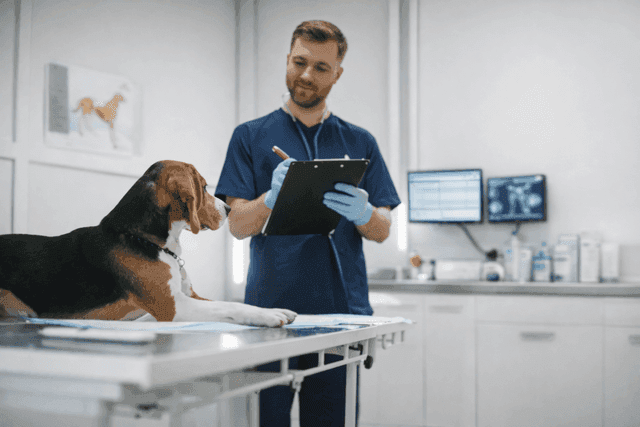
Veterinary clinics operate under very different workload conditions. Some practices maintain predictable appointment schedules, while others — emergency hospitals and high-volume general practices — experience rapid, unpredictable patient volume throughout the day.
In emergency situations, veterinary teams must immediately focus on stabilization, diagnostics, and treatment. This prioritization is necessary, but documentation still needs to be completed — and incomplete records create significant operational complications when multiple veterinarians or shifts are involved in a single patient's care. AI-assisted documentation systems help maintain structured records by capturing consultation details and treatment information during the clinical process, without interrupting medical work. For a closer look at how this plays out specifically in emergency settings, AI in emergency veterinary hospitals covers the workflow in detail.
High-volume general practices benefit from the same automation. When platforms such as Bittsi Veterinary PIMS automatically update treatment sheets, notify technicians, and track medication usage, veterinary teams spend less time managing operational logistics and more time focusing on patient care. For mobile veterinarians — who consult outside a traditional clinic environment — voice-based documentation makes it practical to generate structured records in the field, where typing long notes during appointments is impractical.
How to Choose AI Veterinary Practice Management Software
Not all AI veterinary software is built the same way. Some platforms have added AI as a bolt-on layer to existing record-keeping software. Others — designed with AI from the ground up — embed intelligent capabilities directly into the clinical workflow. When evaluating options, the following features indicate a genuinely AI-powered veterinary PIMS rather than a traditional system with limited AI additions:
|
Feature to Look For |
Why It Matters |
Bittsi |
|
Native AI documentation — built into the PIMS, not a third-party add-on |
Eliminates tool-switching and keeps documentation inside the patient record |
✅ Built-in AI Scribe |
|
SOAP note generation from consultation audio |
Saves 1–2 hours per day per veterinarian |
✅ Yes |
|
Cloud-based architecture |
Enables remote access, automatic updates, no server maintenance |
✅ Yes |
|
Integrated treatment sheets & anesthesia monitoring |
Single system for all clinical documentation — no duplicate entry |
✅ Yes |
|
Clinical AI assistant — not just documentation AI |
Surfaces drug interactions, lab trends, and breed-specific risks during consultation |
✅ Yes |
|
Pet owner app + built-in payment |
Reduces admin load and improves client communication |
✅ Yes |
|
Analytics & reporting |
Tracks clinical trends, treatment patterns, and operational performance |
The most important distinction to evaluate is whether the AI is doing documentation only — or whether it is participating in clinical reasoning as well. Most tools that carry an AI-native label today are built around generating notes faster. That is a genuine improvement, but it is not the ceiling. The more meaningful shift happens when the AI flags a drug interaction before a prescription is confirmed, or identifies a lab pattern that spans multiple visits and would be easy to miss in a busy schedule. For a detailed analysis of what this distinction means in practice, what AI-native veterinary software should actually mean is worth reading alongside this guide.
How Bittsi Is Redefining Veterinary Practice Management
As artificial intelligence becomes more integrated into veterinary software, a meaningfully different category of platforms is beginning to appear: systems designed with AI in mind from the beginning, rather than adding it as a feature later.
Most traditional veterinary software was built as a record-keeping tool. Its primary function was to store information — patient records, treatments, invoices, inventory — while the clinic team handled the rest of the workflow manually. That model worked when clinic software mainly replaced paper records. As clinics became busier and workflows more complex, simply storing information stopped being enough.
Bittsi Veterinary PIMS approaches the problem differently. Instead of only recording what happens in the clinic, the platform helps organize and move information through the workflow. Key capabilities include:
• AI Scribe:
• AI Scribe — generates structured SOAP note drafts from consultation audio, directly inside the patient record
• Clinical AI assistant — helps veterinarians navigate patient records, surface relevant history, and identify clinical patterns across visits
• Treatment sheets & anesthesia monitoring — real-time tracking of procedures, medications, and patient vitals from a single interface
• Pet owner app — reduces front-desk communication overhead and improves client engagement
• Built-in payment processing — eliminates the need for a separate payment tool and reduces end-of-visit friction
• Analytics & reporting — business intelligence tools that track patient flow, treatment patterns, and operational performance over time
Some emerging veterinary platforms are also beginning to summarize patient care more intelligently. Instead of requiring staff to manually review an entire medical record, the system can analyze factors such as vaccination status, visit history, preventive care, and breed-specific health risks — highlighting potential care gaps that might otherwise remain unnoticed during a busy clinic day. The goal is not to replace clinical judgment. Rather, it is to give veterinary teams a clearer, faster overview of what has been done and what may still require attention.
The AI agent for veterinary clinics embedded in Bittsi demonstrates how this broader automation layer works in practice — handling routine coordination tasks across the clinic so veterinary staff can remain focused on patient care.

The Future of AI in Veterinary Practice Management
Veterinary medicine has always balanced two parallel worlds. The medical side of the profession — diagnosis, treatment, surgery — continues to evolve through research and clinical innovation. The operational side, however, has changed much more slowly. For many years, veterinary software focused primarily on storing records rather than supporting the daily workflow of a clinic. Artificial intelligence is beginning to shift that perspective.
At the same time, adoption will likely remain gradual. Veterinary professionals approach new technology cautiously, particularly when it affects medical records or clinical processes. That caution is understandable. But the pressure driving change is real. Veterinarian burnout has become a growing concern across the profession, and administrative workload is consistently cited as one of the main contributors. Reducing that workload does not require replacing veterinarians. It requires removing the operational friction that accumulates throughout the day.
As AI in veterinary practice management continues to mature, the most effective systems will likely be those that operate quietly in the background — assisting with documentation, organizing workflows, and reducing repetitive administrative tasks. For a closer look at how these changes are likely to unfold over the next several years, see Veterinary AI Trends: What's Changing Through 2030.
When that shift fully takes hold, an important change occurs: veterinarians spend less time managing software and more time practicing medicine — which is where their expertise has the greatest impact.
Final Thoughts
Veterinary medicine has never lacked clinical expertise. The real pressure often comes from everything that surrounds the appointment — documentation, coordination, and the steady stream of administrative tasks that fill a clinic's day. Artificial intelligence is beginning to ease part of that burden. Not by replacing veterinarians, but by helping clinics handle the operational work that slows teams down during busy hours.
This shift is already influencing the design of modern veterinary software. Bittsi Veterinary Practice Management Software combines a built-in AI Scribe, clinical AI assistance, workflow automation, integrated treatment and anesthesia tools, and cloud infrastructure — helping veterinary teams manage information more efficiently throughout the day without switching between platforms.
As veterinary technology continues to evolve, the most successful systems will be the ones that quietly support clinical work in the background — reducing administrative friction while allowing veterinarians to focus on what matters most: patient care.
Comments
0 CommentFAQ
More from Veterinary AI & Technology.
Veterinary Online Booking: Appointment Requests, Confirmations, and PIMS Integration
Evaluate veterinary online booking, appointment requests, confirmations, and PIMS integration with a practical workflow checklist for your clinic.
Veterinary Marketing Software: Connecting Your Website, Online Booking, and PIMS
Learn how to connect your veterinary website, appointment requests, and PIMS to track new clients, attended visits, and marketing outcomes.
Reducing Operational Costs in Veterinary Clinics Without Cutting Care
Practical ways to reduce veterinary clinic operating costs — inventory waste, admin time, reconciliation, and no-shows — without compromising patient care.
One short read · every Friday · from working clinics.
Workflow notes, what's actually changing in practice, and one good link from the week. No marketing, no upsells. Unsubscribe whenever.